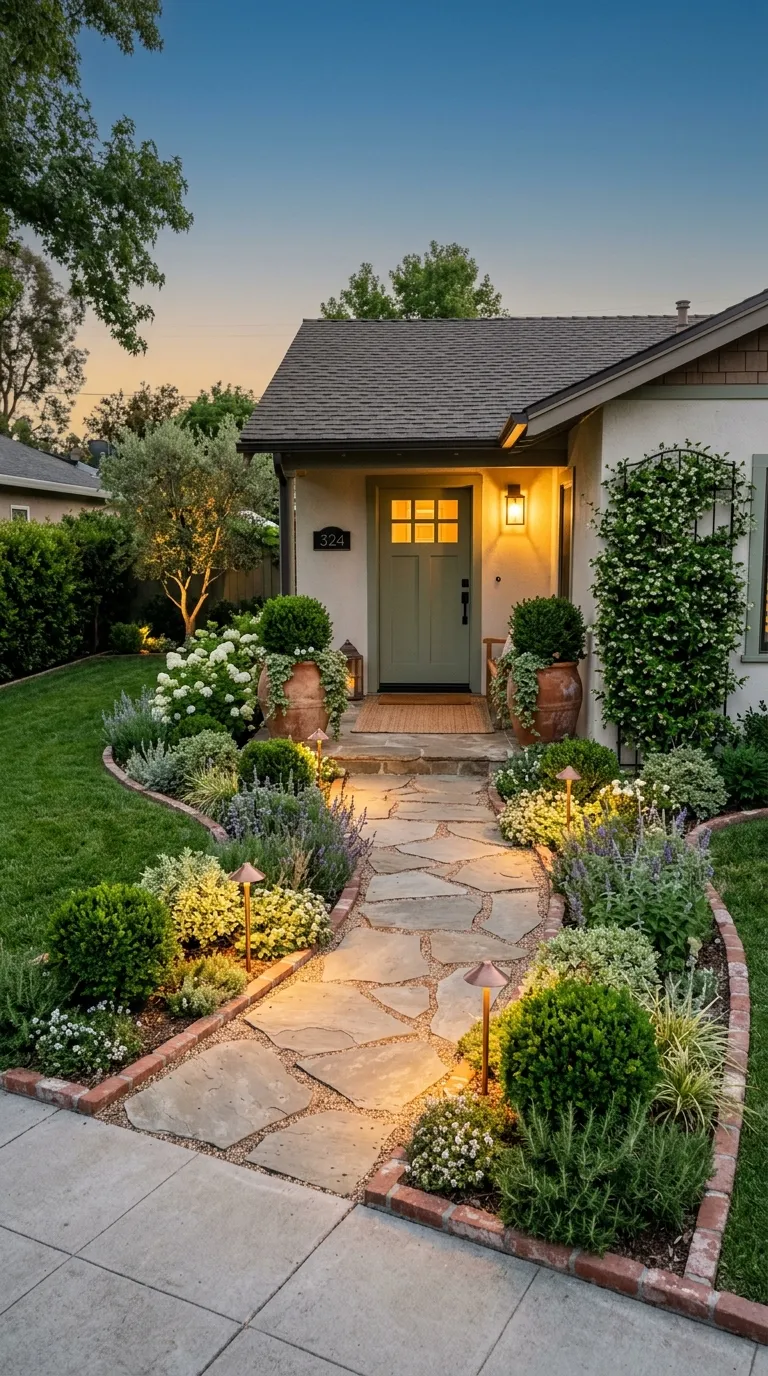
15 Front Yard Landscaping Ideas for Small Yards
Small-yard landscaping is the art of making a limited footprint feel intentional, layered, and full without ever feeling cluttered. This article gives you 15 front yard landscaping ideas for small yards, each built to work in tight spaces without sacrificing style.
Picture a narrow strip of lawn transformed into something that stops neighbors mid-walk. The light hits low mounding shrubs at golden hour, gravel crunches underfoot along a path that curves just enough to feel considered, and a single ceramic planter by the door does more work than an entire bed ever could. This is what modern curb appeal feels like when scale is respected instead of fought — grounded, tidy, and quietly confident. Here are 15 ideas worth saving — and stealing.
Why Small-Yard Curb Appeal Works So Well
Small-yard front landscaping draws from cottage gardening, Japanese pruning philosophy, and modern minimalist hardscaping — three traditions that all solve the same problem: how to make a small space read as generous. Cottage gardening contributes layered, romantic planting; Japanese design contributes restraint and negative space; modern hardscaping contributes clean material transitions. The result is a hybrid style built specifically for limited square footage rather than scaled-down from a big-yard plan.
Core materials lean toward pea gravel, reclaimed brick, corten steel edging, and natural stone pavers, paired with a planting palette of sage green, terracotta, chartreuse, and warm white blooms. Textures stay tactile and low: mounding boxwood, ornamental grasses, and trailing groundcovers do more visual work than tall specimen trees, which can overwhelm a small lot.
This style is trending now because more homeowners are working with starter homes and townhouse-sized lots, and Pinterest search data shows rising interest in “small front yard ideas” and “low-maintenance curb appeal” as buyers prioritize function over sprawling lawns. Small spaces can absolutely achieve this look — the honest limit is scale, not style. Prioritize fewer, larger gestures (one statement planter, one curved path) over many small ones, which read as busy in a tight footprint.
Style at a Glance
| Element | Cottage-Modern Hybrid | Minimalist Hardscape |
|---|---|---|
| Philosophy | Layered, romantic, abundant | Restrained, clean-lined, structural |
| Materials | Brick edging, gravel, ceramic pots | Corten steel, pavers, poured concrete |
| Color palette | Sage, terracotta, warm white | Charcoal, greige, deep green |
15 Front Yard Landscaping Ideas for Small Yards
1. Layered Green-and-White Border Beds
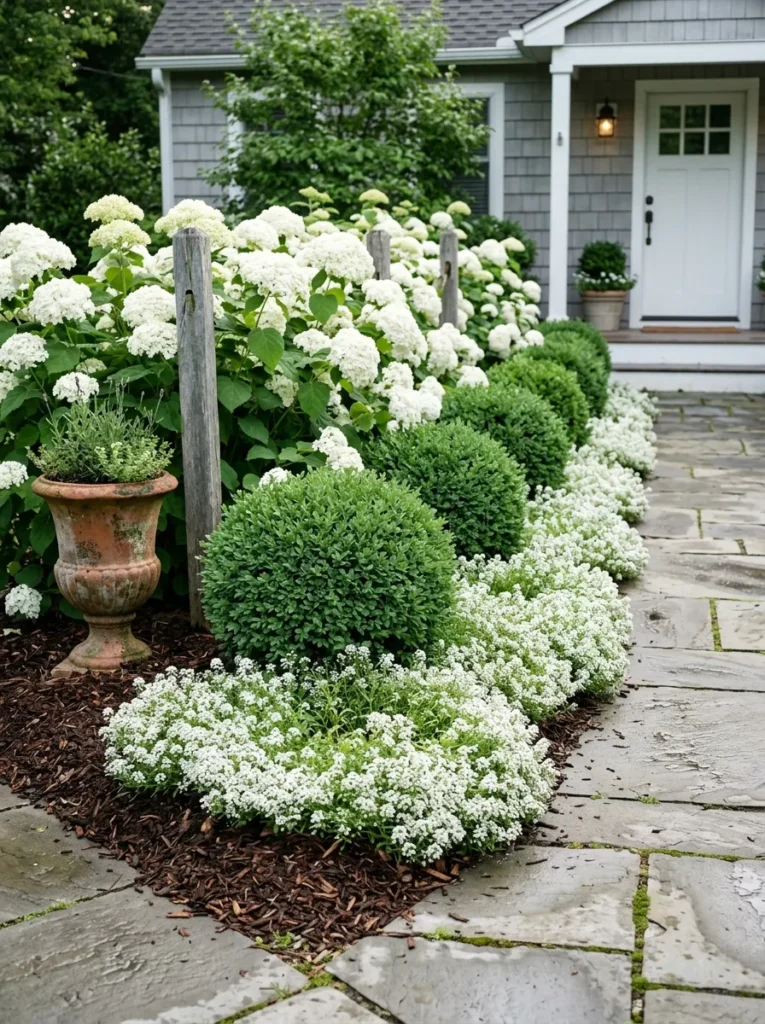
Vibe: Hushed and orderly, like a garden that was edited rather than planted.
Why it works: Layering plant heights — tall hydrangea, mid-height boxwood, low alyssum — creates depth without adding width, which is the single biggest constraint in a small front yard. The white-and-green palette also reflects light back into the space, making the bed feel larger than its actual footprint.
How to get it: Plant in three visible height tiers along a bed no wider than 3 feet, keeping the front row under 12 inches tall so the whole bed stays visible from the sidewalk.
💡 Quick Win: A single row of dwarf boxwood balls, spaced 18 inches apart, instantly reads as “landscaped” even before anything else is planted.
Shop The Look
| Product |
|---|
| Terracotta clay garden urn planter 14-inch |
| Dwarf boxwood topiary spheres set of 3 |
| Weathered wood garden plant stakes set |
| Copper edging strip flexible border |
| Ceramic bird bath sage green glaze |
2. Gravel-and-Paver Pathway Blend
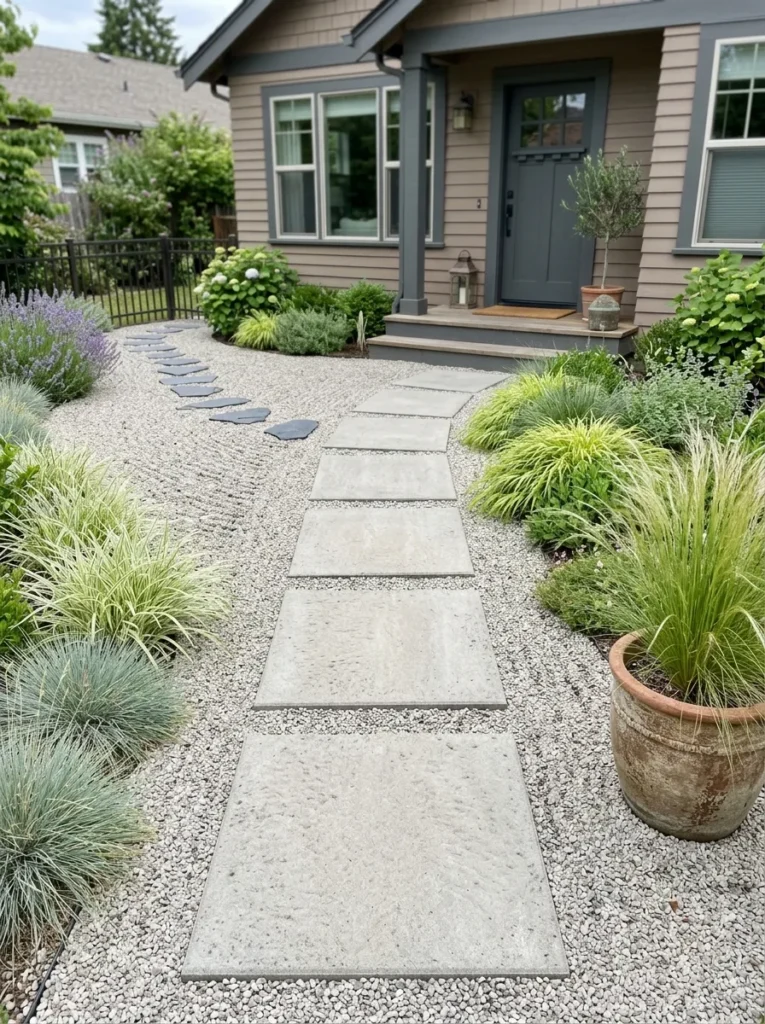
Vigor: Grounded and unfussy, the kind of path that never needs mowing around.
Why it works: Mixing hard pavers with soft gravel creates textural contrast within a single material story, so the path reads as designed rather than default concrete. Gravel is also permeable, which keeps a small lot from feeling paved-over.
How to get it: Set 18-inch square concrete pavers with a 3-inch gravel gap between them, then fill the gaps with quarter-inch pale grey pea gravel rather than mulch, which holds its color longer.
Shop The Look
| Product |
|---|
| Concrete stepping paver square 18-inch |
| Pea gravel pale grey bulk bag |
| Steel landscape edging paver border |
| Potted ornamental fountain grass artificial |
| Slate stepping stone marker set |
3. Vertical Trellis Wall to Maximize Height
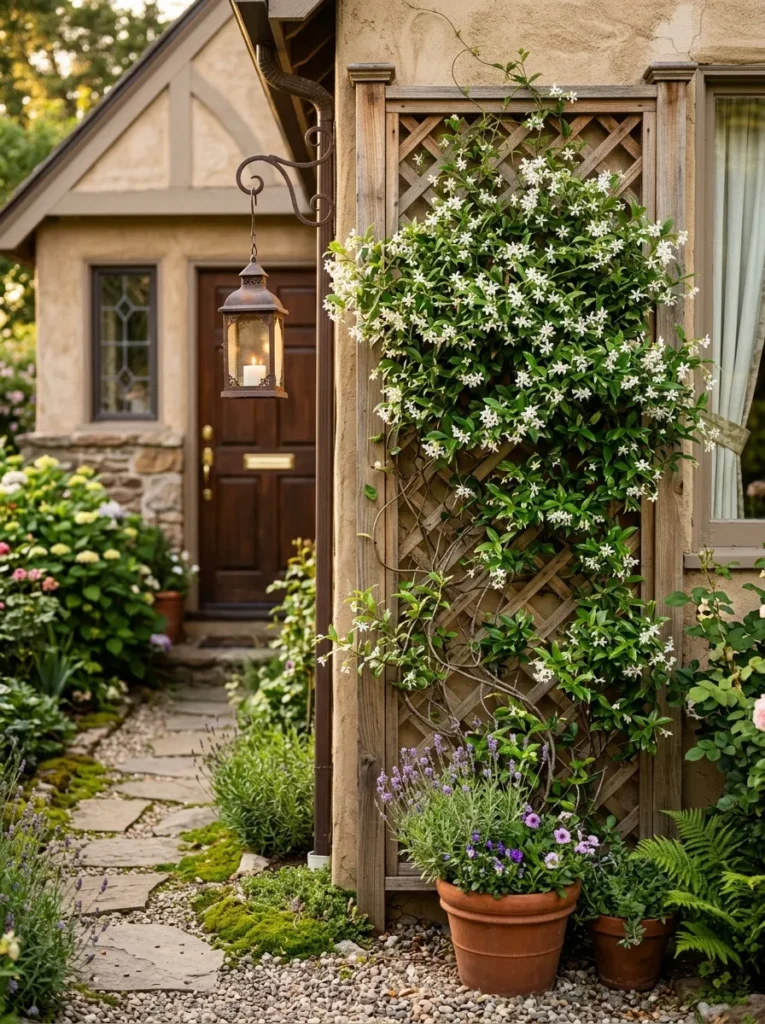
Vibe: Layered and upward-reaching, like the yard grew taller without growing wider.
Why it works: Vertical gardening uses wall space that a small lot has in abundance but ground space rarely does. A trellis with a climbing vine also softens hard house siding, adding texture at eye level where visitors actually look.
How to get it: Mount a cedar lattice panel 4 feet wide directly against a sun-facing wall and train a fast climber like star jasmine or clematis up galvanized wire guides spaced 8 inches apart.
💡 Quick Win: A single obelisk trellis in a large pot achieves the same vertical effect in under an hour, no wall mounting required.
Shop The Look
| Product |
|---|
| Cedar lattice trellis panel 4×6 foot |
| Galvanized wire plant training guides |
| Iron scroll hook lantern outdoor |
| Terracotta lavender planter 10-inch |
| Climbing vine plant support obelisk |
4. Low-Voltage Path Lights Along the Walkway
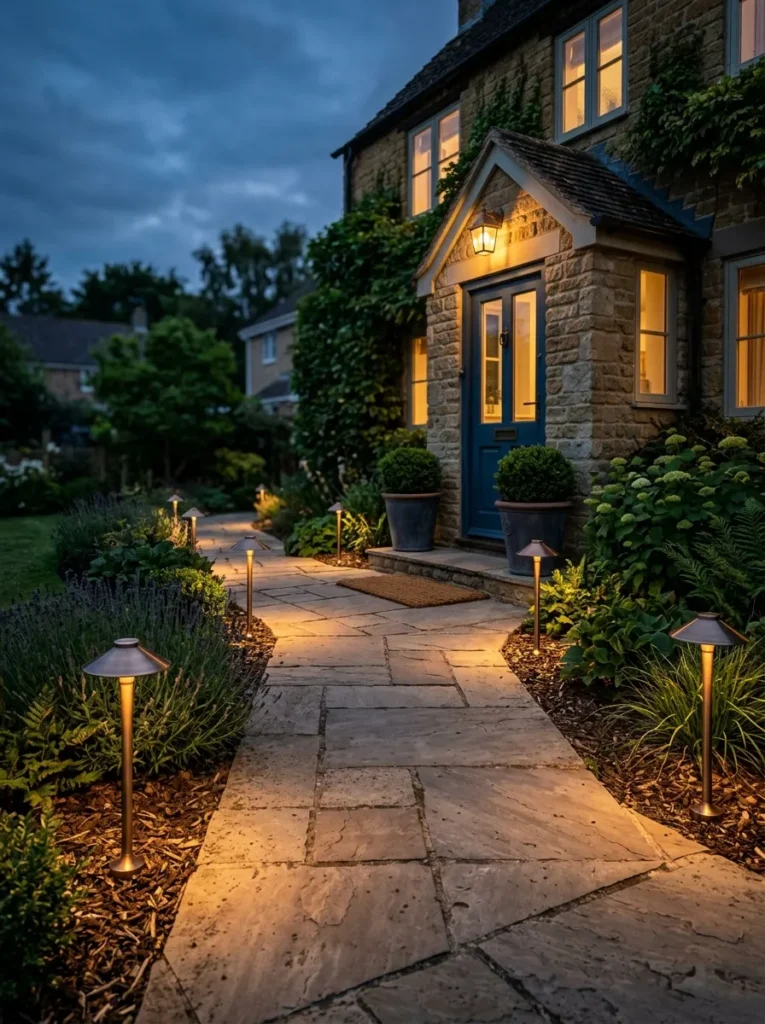
Vibe: Warm and welcoming, the kind of glow that makes a small path feel like an occasion.
Why it works: Lighting extends a front yard’s usable hours and visual presence into the evening, when a small daytime yard would otherwise disappear into darkness. Low, warm-toned fixtures also avoid glare, keeping the light behavior soft rather than institutional.
How to get it: Space bronze-finish low-voltage path lights 6 to 8 feet apart along one side of the walkway only, using 2700K warm-white bulbs to match indoor lighting tones.
Shop The Look
| Product |
|---|
| Bronze low-voltage LED path light set |
| Solar accent uplight for shrubs |
| Woven jute doormat natural fiber |
| Boxwood topiary planter entryway |
| Outdoor extension transformer low-voltage kit |
5. Built-In Stone Bench Nook
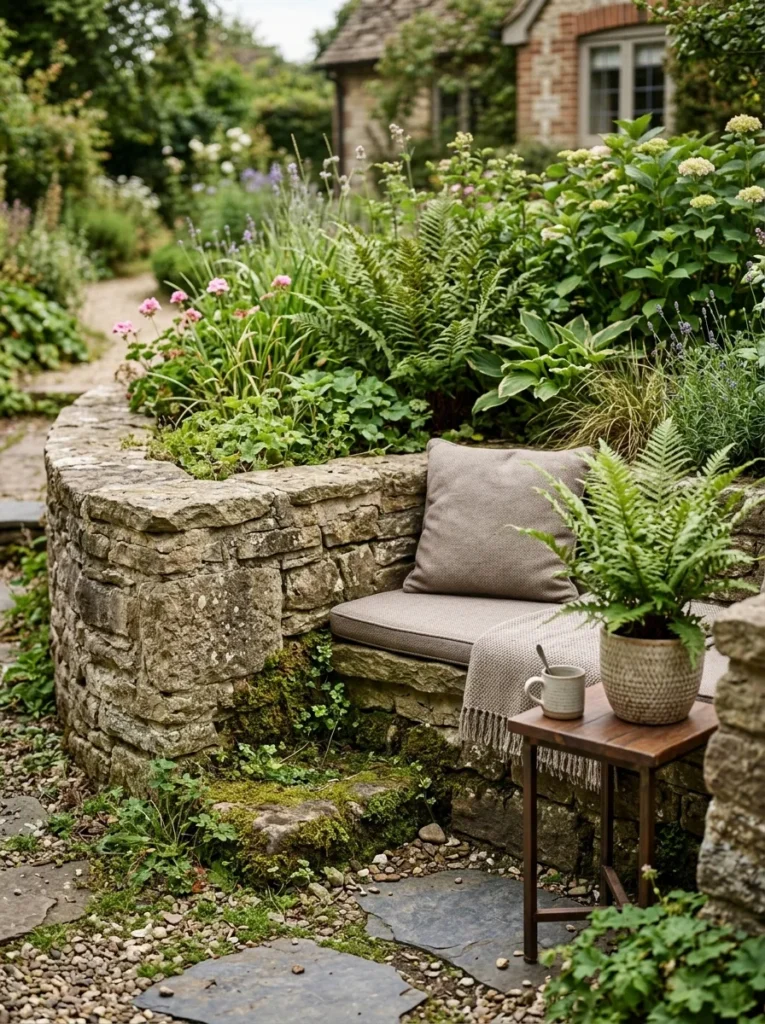
Vibe: Still and grounded, a small pause built right into the landscape.
Why it works: A built-in bench uses the retaining wall a small sloped yard often needs anyway, turning a structural necessity into functional seating. This avoids adding a freestanding furniture footprint, which is the biggest risk of “furnishing” a tiny yard.
How to get it: Cap a low stone or concrete-block retaining wall with a flat natural stone slab at 18 inches high and 16 inches deep, sized for one or two people to sit comfortably.
💡 Quick Win: A single flat granite slab set atop two stacked stone piers creates the same effect without a full retaining wall.
Shop The Look
| Product |
|---|
| Natural stone bench slab outdoor |
| Concrete retaining wall block set |
| Weatherproof outdoor bench cushion neutral |
| Potted Boston fern hanging planter |
| Moss-textured garden stepping accent |
6. Oversized Ceramic Planters Flanking the Door
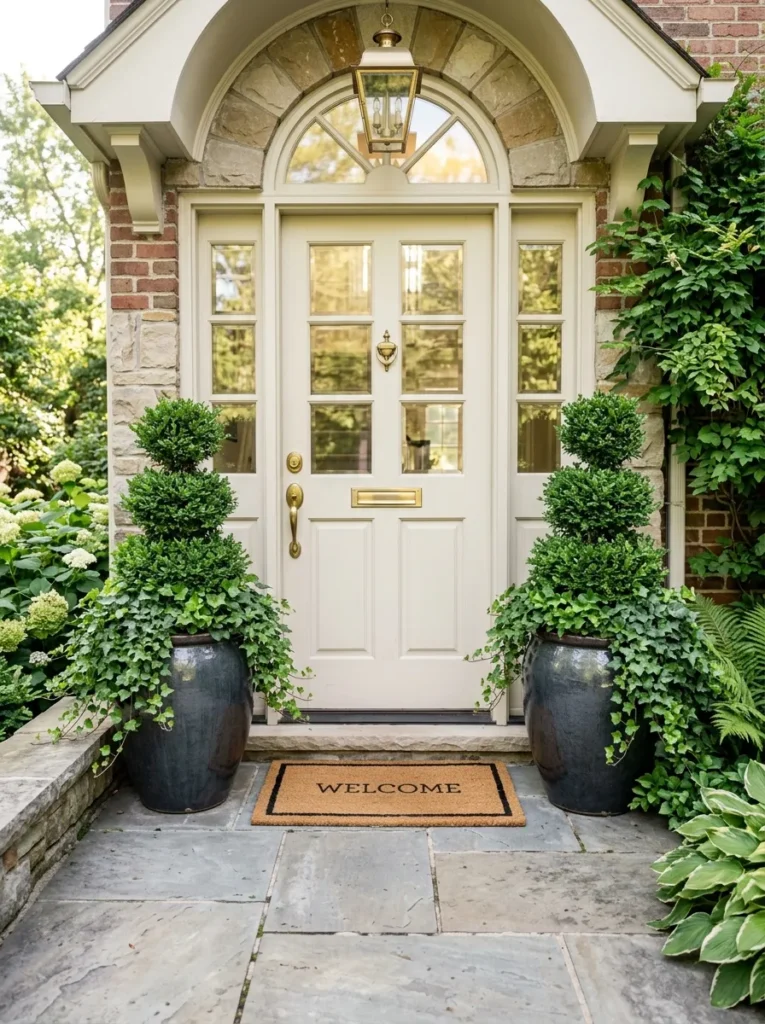
Vibe: Warm and symmetrical, the visual handshake of the whole yard.
Why it works: Two matching oversized planters create instant symmetry and visual weight at the one spot every visitor’s eye lands on first — the front door. This principle, called anchoring, lets a small yard skip elaborate bed design entirely and still feel finished.
How to get it: Choose two identical 20-inch glazed ceramic planters in charcoal or warm terracotta, and plant each with one upright boxwood and one trailing ivy for height-and-drape contrast.
Shop The Look
| Product |
|---|
| Glazed ceramic planter 20-inch charcoal set of 2 |
| Trailing English ivy potted plant |
| Upright spiral boxwood topiary |
| Brass door knocker hardware |
| Coir welcome mat natural fiber |
7. Terracotta and Sage Planting Palette
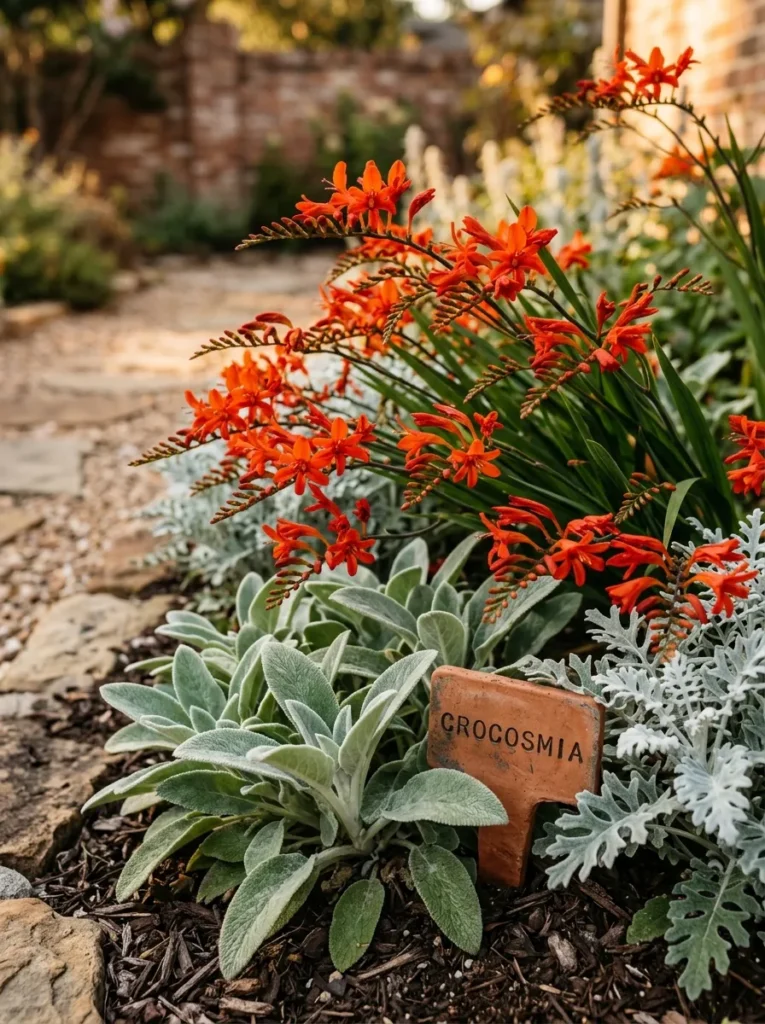
Vibe: Warm and earthy, like the bed was mixed from a paint chip rather than a nursery cart.
Why it works: A restrained two-to-three color palette reads as intentional in a small bed, where too many competing bloom colors quickly look chaotic in a confined view. Terracotta and sage also share the same warm undertone, so nothing clashes even as bloom times shift through the season.
How to get it: Anchor the bed with silver-toned dusty miller as a neutral base, then add terracotta crocosmia for color and sage lamb’s ear for texture, keeping every other plant in this same three-tone family.
💡 Quick Win: Swap seasonal annuals in these same three tones rather than introducing new colors, so the palette stays consistent year-round.
Shop The Look
| Product |
|---|
| Terracotta ceramic plant marker stakes |
| Dusty miller potted plant silver |
| Sage green ceramic garden pot |
| Copper plant label tags set |
| Terracotta window box planter |
8. Reclaimed Brick Edging for Beds
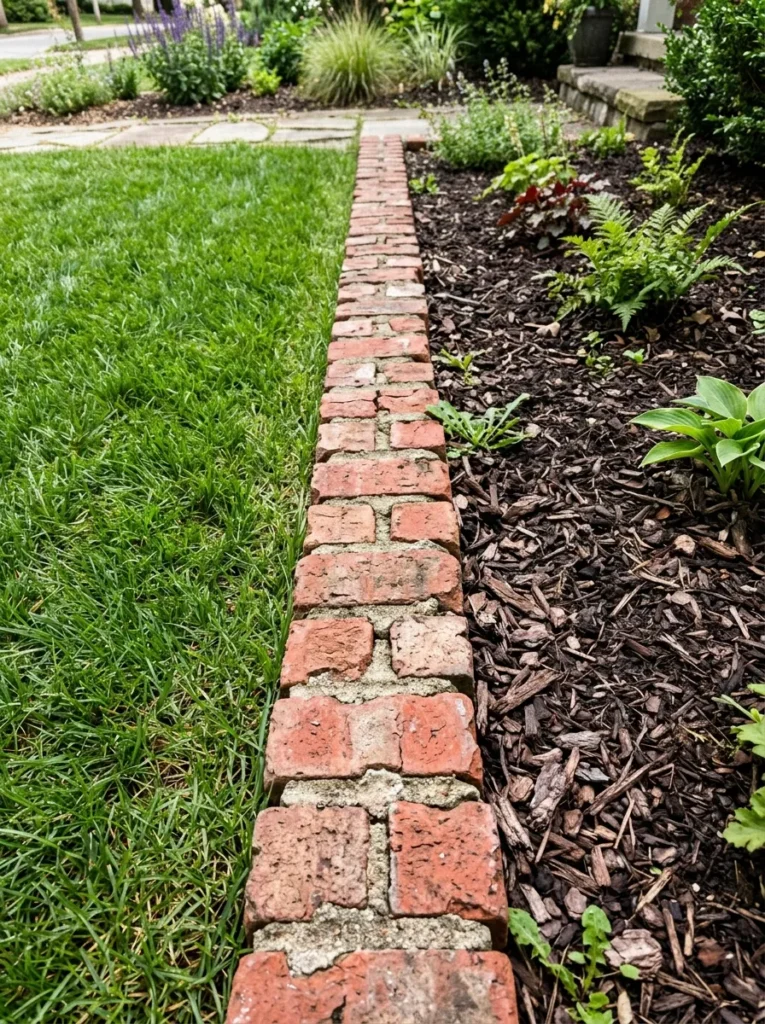
Vibe: Raw and grounded, a bed that finally has a clean line.
Why it works: Edging defines the boundary between lawn and bed, which is often the single most unfinished-looking element in a small yard. Reclaimed brick specifically adds age and texture that new plastic edging can’t replicate, giving even a brand-new bed instant history.
How to get it: Set reclaimed brick on its side in a soldier course, buried two-thirds into the soil so only 2 inches show above grade, running the full perimeter of each bed.
Shop The Look
| Product |
|---|
| Reclaimed weathered red brick pavers |
| Rubber mallet for brick setting |
| Landscape fabric weed barrier roll |
| Dark brown hardwood mulch bag |
| Brick edging spacer tool set |
9. Curved Walkway to Create Visual Flow
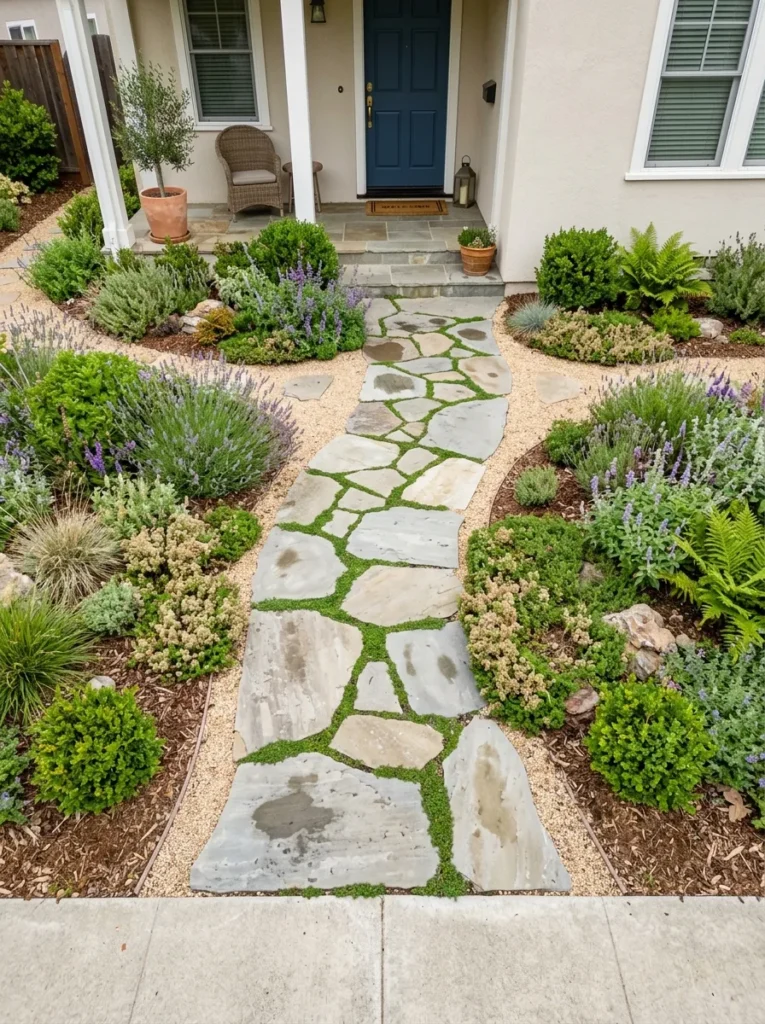
Vibe: Airy and unhurried, a path that suggests there’s more yard than there is.
Why it works: A curved path uses forced perspective — the eye can’t see the whole route at once, so the yard reads as deeper than its actual dimensions. Straight paths in small yards often expose the full lot length in one glance, which shortens the sense of space.
How to get it: Lay irregular flagstone in a gentle S-curve rather than a straight line, planting low-growing creeping thyme in the joints so the path blends into the bed rather than cutting across it.
Shop The Look
| Product |
|---|
| Irregular flagstone paving set natural |
| Creeping thyme groundcover plant plugs |
| Polymeric jointing sand for pavers |
| Landscape edging flexible curve border |
| Garden hand tamper for paver base |
10. Uplit Ornamental Tree as a Focal Point
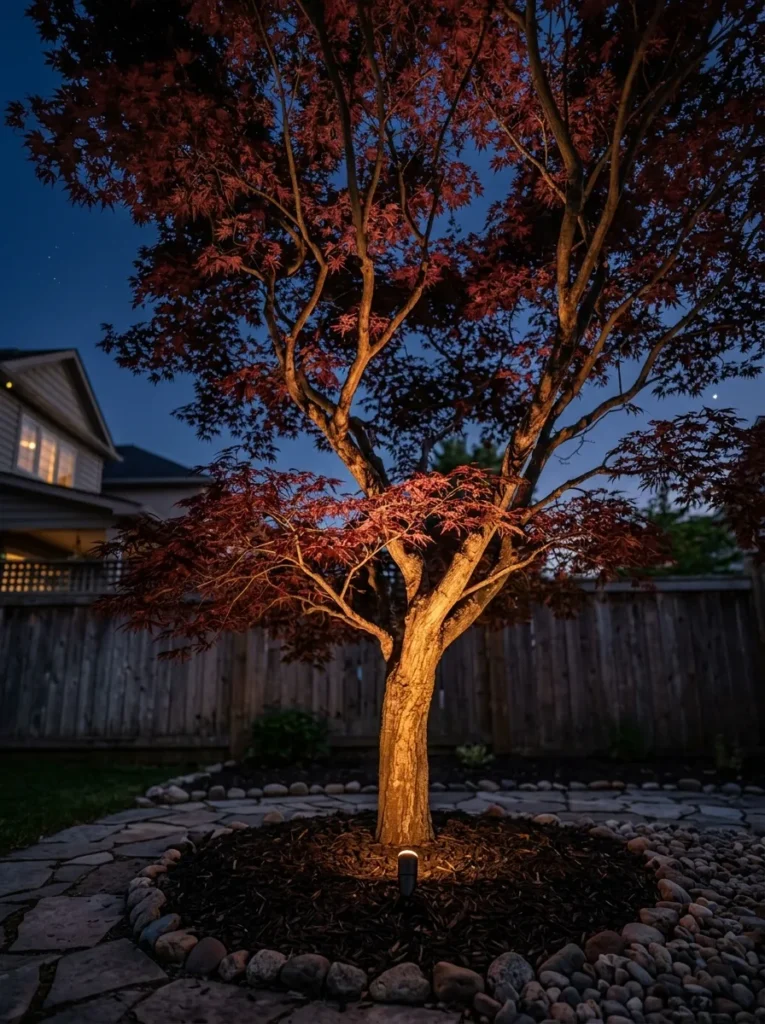
Vibe: Moody and dramatic, the one tree that makes the whole yard feel curated after dark.
Why it works: Uplighting a single specimen tree creates a nighttime focal point using light behavior rather than more plants, which matters in a small yard where adding more greenery isn’t always possible. One well-placed uplight also does the visual work of an entire lighting scheme.
How to get it: Place one warm-toned 3000K uplight 18 inches from the trunk of a compact ornamental tree like a Japanese maple, angled to catch the canopy rather than the bark.
💡 Quick Win: A single solar spotlight staked at the base of any existing shrub achieves 80 percent of this effect for under $30.
Shop The Look
| Product |
|---|
| Warm-white LED uplight spotlight outdoor |
| Japanese maple dwarf tree potted |
| Solar spike spotlight for landscaping |
| Mulch ring edging for tree base |
| Landscape river rock border stones |
11. Compact Bistro Seating Area
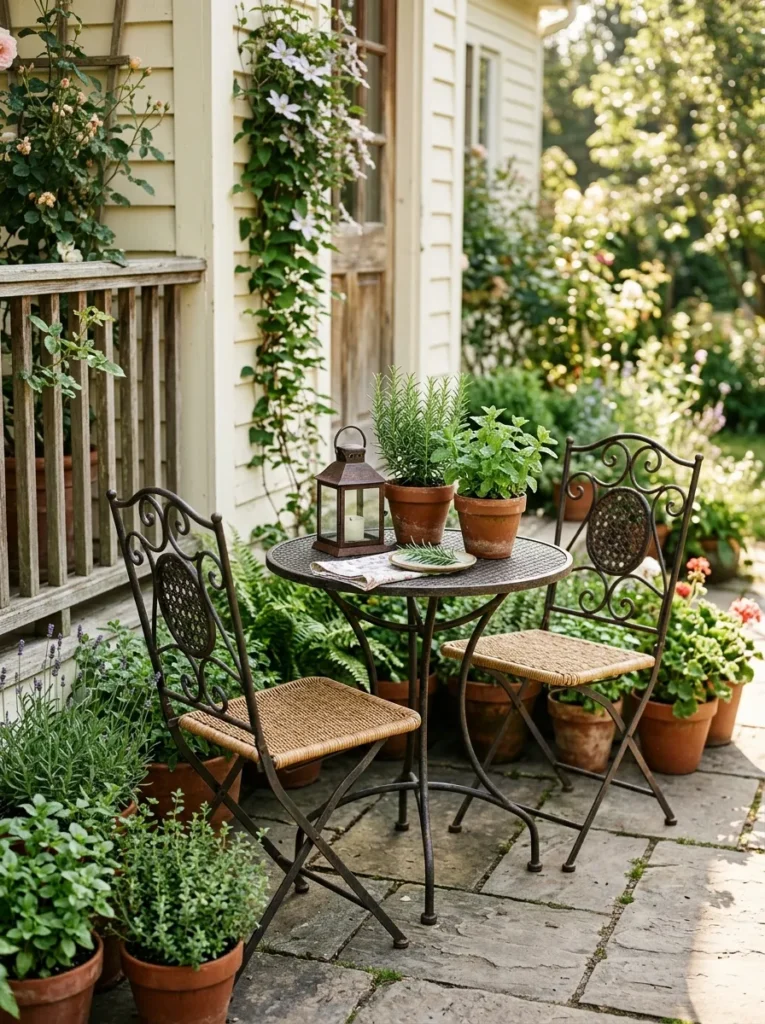
Vibe: Warm and inviting, a corner that turns “front yard” into “front porch garden.”
Why it works: A compact bistro set gives a small yard a reason to be used, not just viewed, which changes how the whole space is perceived by visitors. Choosing a round table over a rectangular one also reduces the visual footprint by roughly 25 percent in a tight corner.
How to get it: Fit a 24-inch round wrought iron bistro table with two folding chairs into any corner with at least a 5-by-5-foot clearance, surrounded by low potted herbs for scent at seated height.
Shop The Look
| Product |
|---|
| Wrought iron bistro table 24-inch |
| Folding outdoor bistro chairs set of 2 |
| Terracotta herb planter trio rosemary mint |
| Small outdoor lantern candle holder |
| Woven outdoor placemat set neutral |
12. Chartreuse and Burgundy Foliage Contrast
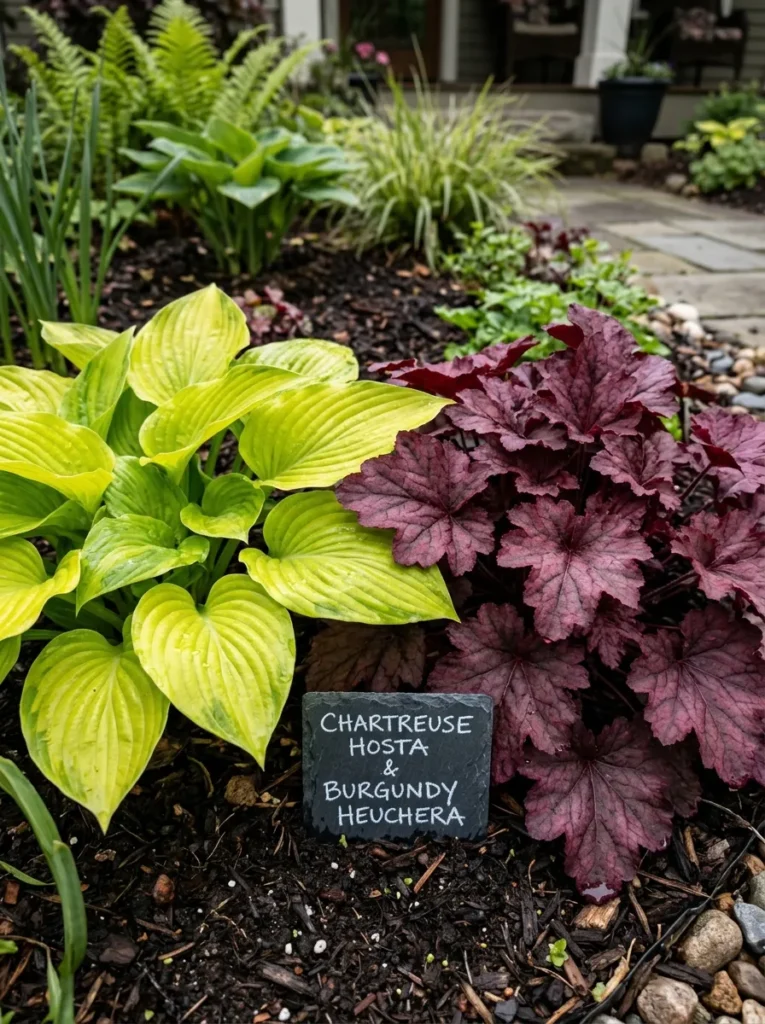
Vibe: Layered and rich, foliage doing the job flowers usually do.
Why it works: Complementary color contrast between chartreuse and burgundy creates visual interest that lasts all season, unlike blooms that fade within weeks. This is especially valuable in small beds, which have less room to rotate seasonal color.
How to get it: Cluster chartreuse hosta in groups of three next to burgundy heuchera in groups of three, keeping both at the same low height so the contrast reads as a single tonal statement rather than two competing plants.
Shop The Look
| Product |
|---|
| Chartreuse hosta potted perennial |
| Burgundy heuchera coral bells potted |
| Slate garden plant marker set |
| Dark mulch bark nuggets bag |
| Copper plant ring stake support |
13. Address Sign with Botanical Framing
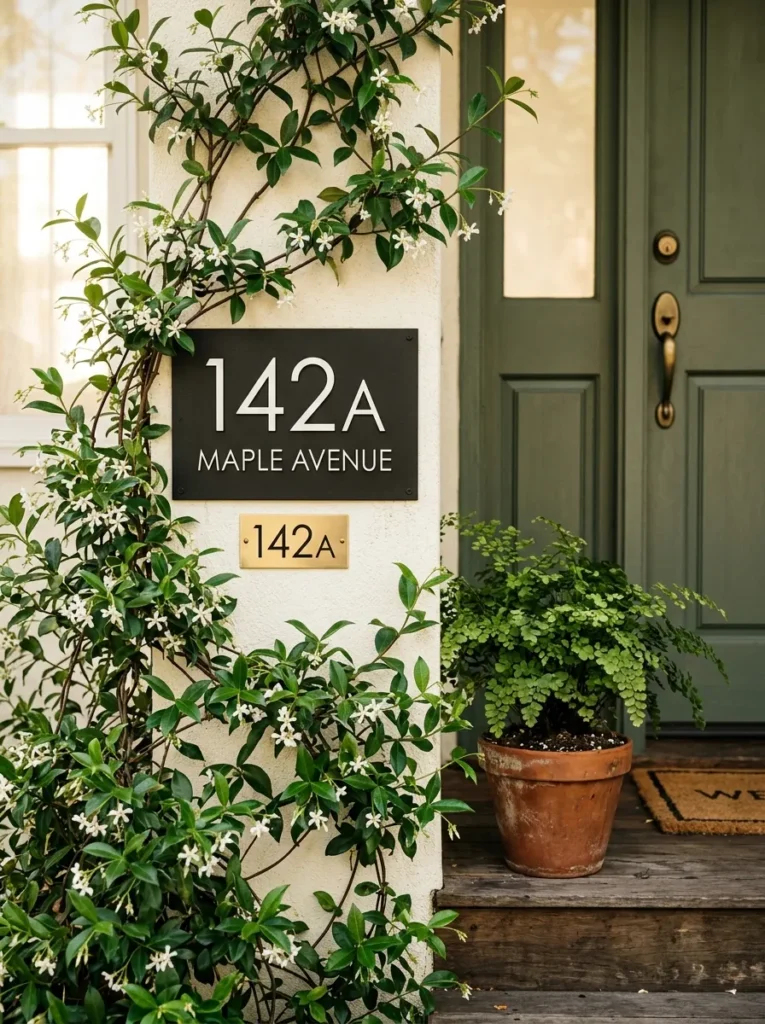
Vibe: Warm and personal, the small detail that makes a house feel like a home.
Why it works: An address sign framed by greenery draws the eye to a fixed focal point near the door, which anchors an otherwise small and undefined entry area. It also does double duty as wayfinding and decor, which matters when every square foot needs to earn its place.
How to get it: Mount a matte black modern address plaque at eye level beside the door, then train one climbing jasmine vine to frame one side of it on a slim wire guide.
💡 Quick Win: A single potted fern set directly beneath the sign achieves the same framing effect with zero mounting or training required.
Shop The Look
| Product |
|---|
| Modern matte black address plaque |
| Climbing star jasmine potted vine |
| Slim wire vine training guide |
| Potted Boston fern entryway planter |
| Brass house number wall mount |
14. Corten Steel Edging for Modern Definition
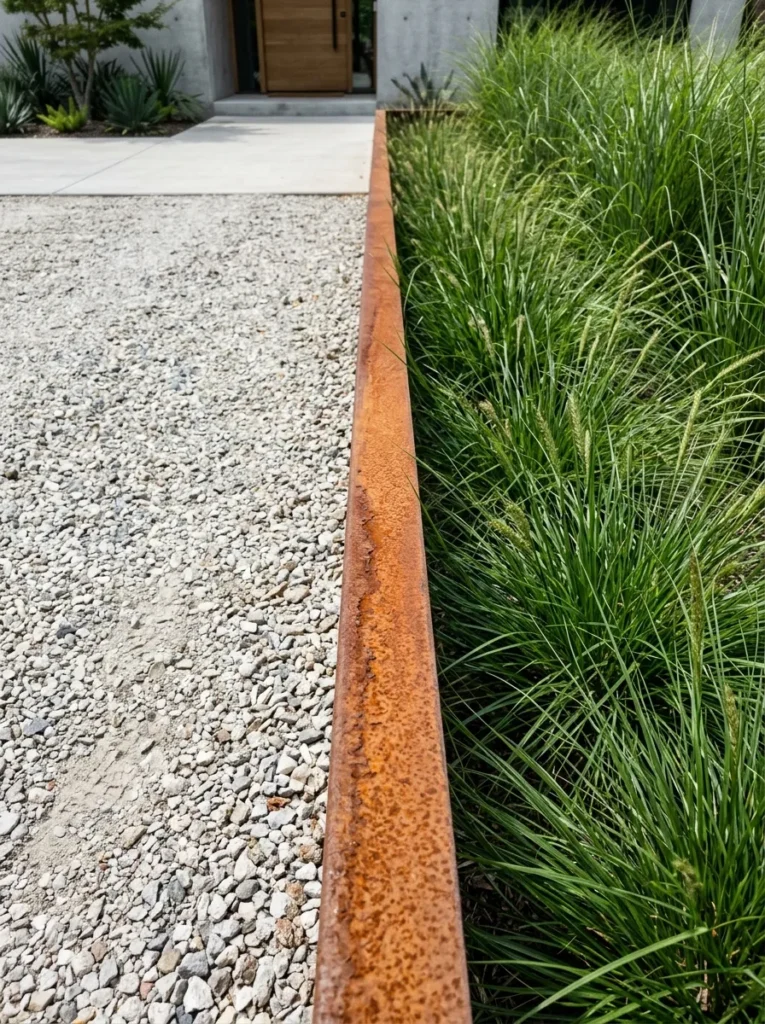
Vibe: Grounded and modern, a line so clean it reads as architecture.
Why it works: Corten steel’s warm rust patina contrasts against cool grey gravel and green foliage, giving a small modern yard a defined material story in a single element. Its rigidity also holds a perfectly straight or curved line far longer than wood or plastic edging, which warps within a season or two.
How to get it: Install 4-inch-tall corten steel edging strips along the gravel-to-bed transition, staking every 3 feet, and let the surface weather naturally over the first six weeks rather than sealing it.
Shop The Look
| Product |
|---|
| Corten steel garden edging strip |
| Steel edging stake anchors set |
| Ornamental fountain grass potted plant |
| Pale grey pea gravel bulk bag |
| Landscape fabric weed barrier roll |
15. All-White Moon Garden for Evening Curb Appeal
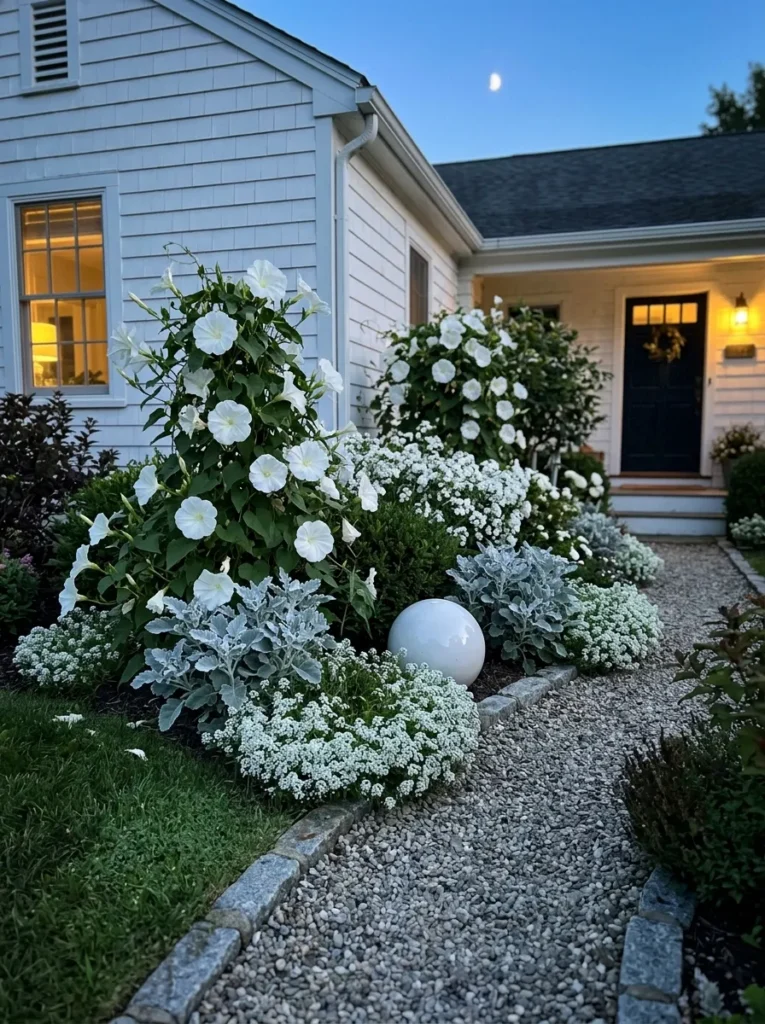
Vibe: Luminous and quiet, a bed that comes alive right as everything else fades.
Why it works: White and silver-toned foliage reflect available light far more than colored blooms, making them the only planting choice that actually reads well at dusk and after dark in a yard without extensive lighting. This lets a small front yard extend its visual presence into evening hours for free.
How to get it: Plant white moonflower, white alyssum, and silver dusty miller together in one bed near the front walkway, avoiding any colored blooms nearby that would compete with the white palette in low light.
Shop The Look
| Product |
|---|
| White ceramic garden gazing orb |
| Dusty miller silver potted plant |
| White alyssum bedding plant flat |
| Moonflower vine seed starter plant |
| White pebble garden mulch bag |
How to Start Your Small-Yard Landscaping Transformation
Start with the walkway, not the plants. A defined path — whether flagstone, pavers, or brick-edged gravel — gives every other decision, from bed shape to planter placement, a line to follow, and it’s the one element visitors notice first no matter how small the lot.
The most common mistake is over-planting: cramming too many species into one small bed until nothing has room to read clearly. This happens because each plant looks sparse alone at the nursery, but fills in within a season. Fix it by choosing three plant varieties maximum per bed and repeating them in clusters of three.
Three budget entry points under $50: a single 14-inch terracotta urn planter, a set of solar spike spotlights for one shrub, and a roll of flexible steel edging for one bed border.
A full small-yard transformation realistically takes one full weekend for hardscaping basics like edging and a path, plus one growing season — about three to four months — for plantings to fill in. A starter version with pots, edging, and lighting runs $150 to $400; a full bed-and-path overhaul typically runs $800 to $2,000 depending on material choices.
Frequently Asked Questions About Small Front Yard Landscaping
What is the difference between small-yard landscaping and standard front yard landscaping?
Small-yard landscaping prioritizes fewer, larger design gestures — one statement planter, one curved path — over the multiple beds and specimen trees a standard lot can absorb. Standard yards can support layered zones with a lawn, a tree, and separate beds; small yards typically need to combine these into one cohesive planting area. The core difference is editing: small-yard design succeeds by removing elements, not adding them.
What color palette works best for a small front yard?
A restrained two-to-three color palette, such as sage green with terracotta or white with chartreuse, reads as intentional in a tight space where too many competing bloom colors look chaotic. Silver-grey foliage like dusty miller is a useful neutral that ties bright colors together. Sticking to warm undertones throughout also keeps the palette cohesive as seasonal blooms rotate.
How much does small front yard landscaping typically cost?
A starter version with potted plants, edging, and basic lighting typically costs between $150 and $400. A fuller transformation including a new walkway, edging, and mature plantings runs $800 to $2,000, depending on whether pavers or poured concrete are used. Labor costs roughly double material costs if the work is professionally installed rather than DIY.
Is small-yard landscaping compatible with a modern or minimalist home?
Yes — corten steel edging, poured concrete pavers, and a restricted plant palette of ornamental grasses and boxwood suit modern architecture particularly well. The key adaptation for modern homes is keeping bed shapes geometric and edging crisp rather than curved and cottage-style. Adding one warm material, like cedar or terracotta, keeps a modern small yard from feeling cold.
What is the single most impactful element for small front yard curb appeal?
Path lighting or a defined walkway edge consistently tests as the highest-impact single element, since it’s the first thing visitors notice and the one part of the yard used in every season and time of day. A defined, well-lit path signals maintenance and intention even before any plant is visible. Low-voltage bronze path lights spaced 6 to 8 feet apart are the most commonly recommended starting fixture.
Ready to Create Your Small-Yard Landscaping Transformation?
These 15 ideas cover color palettes, material choices, lighting, layout, and small-space tricks — proof that a tiny front yard has more design range than it gets credit for. Starting with just one bed, one planter, or one stretch of edging is not a compromise; it’s how every one of these yards actually got built. Today, measure your front walkway and order one roll of flexible edging or two matching ceramic planters to anchor the door. Once even one of these ideas is in place, walking up to your own front door will start to feel like arriving somewhere designed, not just maintained. Save your favorites now — especially the ones that use materials you already have on hand, like brick or gravel — so you’re ready to start this weekend.